Europe’s Quantum Leap: Can the EU Catch Up?

Updated: Sep 2, 2025
On 2 July 2025, the European Commission unveiled its Quantum Europe Strategy, a bold roadmap to make Europe a global leader in quantum technologies by 2030.
At its core, the strategy tackles Europe’s “quantum paradox”:
Strong in science but weak in commercialisation.
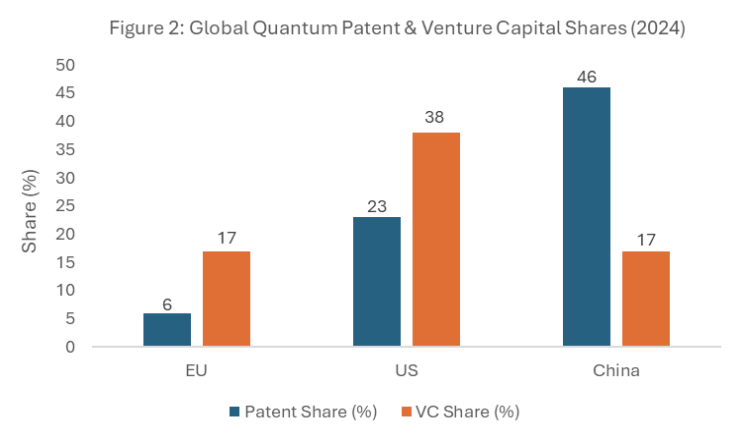
Europe produces world-class research and start-ups, yet trails the US and China in patents, private investment, and corporate involvement.
To close this gap, the EU has mobilised over €11 billion in public funding and plans a Quantum Act (2026) to attract private capital, align fragmented programs, and accelerate commercialisation.
The strategy rests on four pillars:
Research & innovation: Coordinated agendas and “grand challenges” linking academia and industry.
Infrastructure: Chip fabrication pilot lines, design facilities, and industrial-scale roadmaps.
Ecosystem: Scale-up funds, start-up support, and supply chain reinforcement.
Security & defence: Quantum encryption, sensing, and computing integrated into EU space and security programs.
💡 Why does it matter?
Quantum is poised to transform finance, pharma, aerospace, and logistics with global market forecasts topping $170 billion by 2040 and potential value creation of $1–2 trillion by the mid-2030s.
Execution is key. Without sufficient venture capital, corporate buy-in, and scale-up mechanisms, Europe risks losing talent, IP, and firms abroad, repeating past digital sector patterns.
From an investor perspective, this is not just a tech race. It’s a matter of strategic autonomy.
Europe is ensuring its banks, industries, and governments rely on home-grown quantum infrastructure rather than US or Chinese providers.
The next decade will be decisive. Will Europe nurture quantum champions and secure leadership or risk dependence at a critical frontier?
🔑 One thing is clear: quantum has moved from research labs to the boardrooms of policymakers and investors.

Comments